
The Hormonal Connection: Women, Menopause, and the Brain
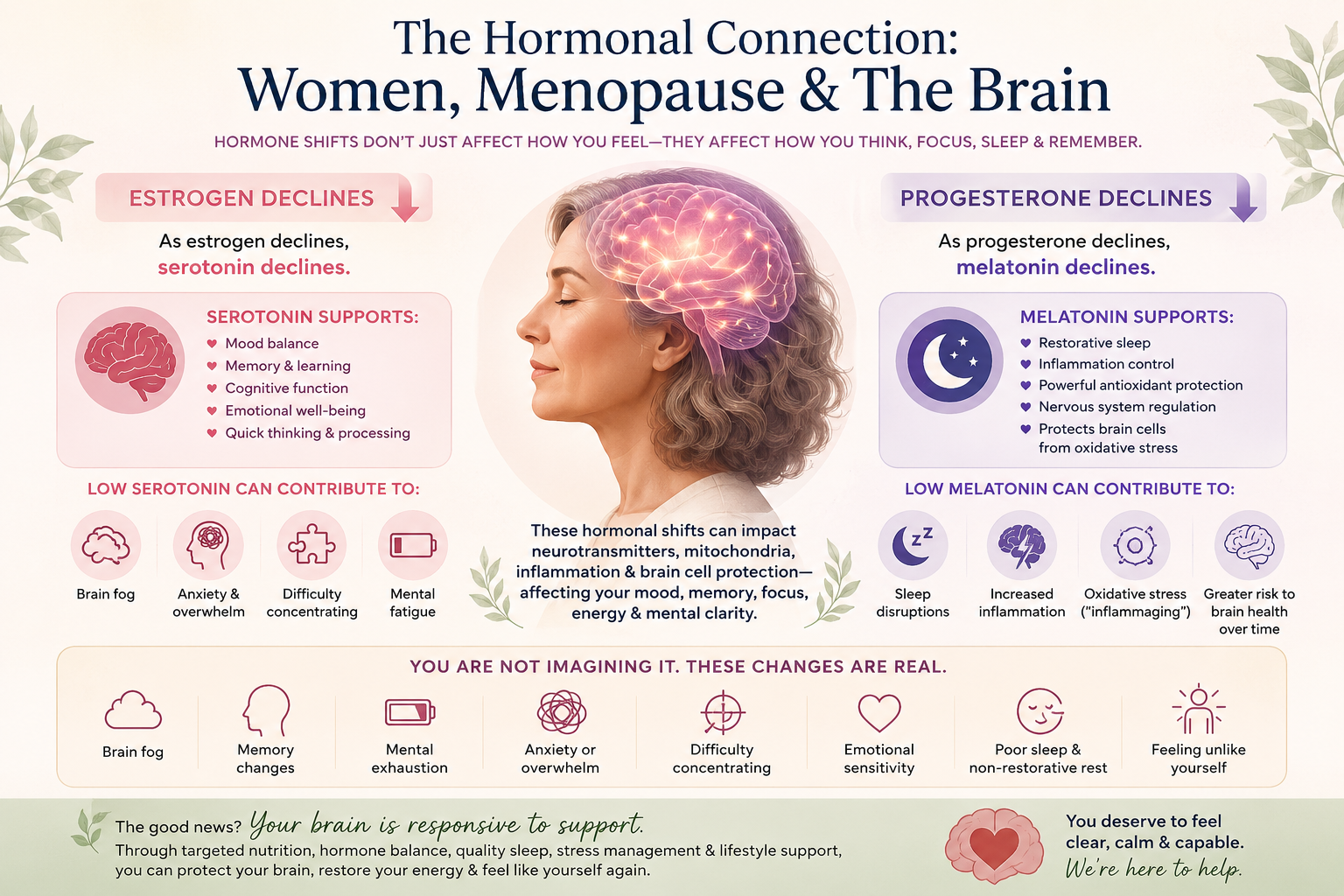
For many women navigating perimenopause and menopause, the changes happening within the body can feel confusing, frustrating, and deeply disorienting. One day you feel mentally sharp and emotionally grounded, and the next you may find yourself struggling with brain fog, forgetfulness, exhaustion, anxiety, sleep disruption, or simply feeling unlike yourself.
Many women silently wonder:
“What is happening to me?”
What often goes unrecognized is just how deeply hormonal changes affect the brain.
During perimenopause and menopause, prioritizing brain health becomes non-negotiable because of two major hormonal shifts happening within the body: the decline of estrogen and progesterone.
📉 The Estrogen Drop & Cognitive Function
As estrogen declines, serotonin declines alongside it.
Serotonin is far more than a “feel good” neurotransmitter. It plays a vital role in memory, learning, cognition, emotional regulation, focus, and quick mental processing. When estrogen levels begin fluctuating and eventually declining, many women suddenly notice changes in the way they think, feel, and function mentally.
This is often why women begin experiencing:
Brain fog
Forgetfulness
Difficulty concentrating
Mental fatigue
Increased anxiety
Emotional overwhelm
Slower cognitive processing
Many women blame themselves for these symptoms, assuming they are simply stressed, aging, or “not handling things well.” But these changes are often deeply physiological and connected to the hormonal shifts occurring within the body.
🌙 The Progesterone Drop & Melatonin
As progesterone declines, melatonin declines as well.
While melatonin is commonly associated with sleep, it is actually much more than a sleep hormone. Melatonin acts as a master antioxidant within the body and plays a significant role in protecting the brain and nervous system.
Melatonin helps:
Regulate inflammation
Protect neurons from oxidative stress
Support nervous system regulation
Promote restorative sleep
Protect against cellular aging
As melatonin declines, many women begin experiencing disrupted sleep, increased inflammation, nervous system dysregulation, and heightened exhaustion. Poor sleep alone can dramatically impact mood, cognition, memory, emotional regulation, and overall brain function.
This ongoing inflammatory process is sometimes referred to as “inflammaging,” a chronic low-grade inflammatory state that contributes to accelerated aging within the body and brain.
🔋 The Mitochondrial Bottom Line
One of the most overlooked aspects of menopause and brain health involves the mitochondria.
Mitochondria are the tiny powerhouses inside every single cell in your body. Their job is to create energy for your cells to function properly. When estrogen and progesterone decline, mitochondrial function can become compromised.
When the mitochondria struggle, women often experience:
Physical exhaustion
Mental fatigue
Brain fog
Apathy
Cognitive slowing
Difficulty recovering from stress
Feeling emotionally and physically depleted
Emerging research also suggests that mitochondrial dysfunction may contribute to the protein plaque buildup associated with neurodegenerative conditions such as dementia and Alzheimer’s disease.
This is why supporting the brain during perimenopause and menopause is about far more than symptom management. It is about supporting long-term cognitive resilience, nervous system health, energy production, and overall quality of life.
☀️ Supporting the Brain During Menopause
The good news is that the brain is incredibly responsive to support.
During these transitional years, women benefit greatly from intentionally focusing on:
Nutrient-dense nutrition
Hormone health
Nervous system regulation
Sleep quality
Stress management
Movement and fitness
Inflammation reduction
Blood sugar balance
Small, consistent changes can create profound shifts in how women feel physically, mentally, and emotionally.
Many women are surprised by how much clearer, calmer, more energized, and emotionally balanced they begin feeling once the body is properly supported.
🍽️ Let Us Do the Heavy Lifting
At our practice, we tailor dietary and wellness plans specifically to your unique biochemistry so you can stop guessing and start feeling supported.
Many women tell us they finally feel understood after years of feeling dismissed, unheard, or told their symptoms were simply “part of aging.”
We help simplify the process by creating supportive, realistic nutrition plans designed to nourish the brain and body without overwhelm.
🎁 June Exclusive Offer
Reach out this month to learn more about TCL Meal Planning — featuring hand-curated menus, colorful photos, easy directions, grocery lists, and seamless Instacart integration.
Schedule your Comprehensive Assessment in June, and you will receive a complimentary week of TCL menus delivered directly to your inbox.
If your brain and body have been asking for support lately, we are here to help.